Showing posts with label Right service. Show all posts

Wednesday, November 19, 2014

General Santos City Chamber of Commerce and Industry turns 40!

In unity there is strength. Entrepreneurs and businessmen have long realized that by banding together in the true spirit of cooperation, mutual respect, and best-practice sharing, they become stronger, and their civic, commercial, social, and economic interests and rights protected. Such is the beauty of founding the General Santos City Chamber of Commerce and Industry, Inc. (GSCCCII).

Born on October 25, 1974 as the local business community’s response to the challenge of countryside business development, GSCCCII has grown strong and evolved through the years. Like all growing organizations, it obtains its share of victories and challenges.

In the early 1980s, it was given real impetus and renewed vitality when the city’s tuna and fishing industries, complemented by the rise of the mainly agri-based sector, began its phenomenal growth. In 1988, GSCCCII expanded its membership and range of services.  As of to date, it has 160 individual and corporate members coming from all sectors of the business community.

These 160 individual and corporate members come from the following sectors: Industry and Manufacturing; Financial Services; Agriculture; Fishing and Aquaculture; Commerce and Trade; Transportation and Communication; Information Technology; Real Estate and Construction; Tourism; Livestock; General Services; and Sector-At-Large.

Young at 40, GSCCCII is still a growing organization. We advance as we prepare the business community to embrace the future, capacitate our members professionally, and ready everyone to welcome the full impact of the ASEAN economic integration. We will lead the business community to prepare, tackle, and mitigate the impact of climate change. We will continue to champion what is true, right, and just. Above all, GSCCCII remains steadfast in our quest for Excellence, unwavering Commitment, and effective Service.

We toast to our victories!


Tuesday, August 5, 2014

Good governance mocked!

One of the saddest realities that confronted me while serving the government for sixteen solid years is seeing with my two naked eyes, supposedly government “servants” turn abusive, arrogant, high-handed, and totally unprofessional individuals mocking good governance.
Look around you. Look around your work place. They are lurking there. Plain-looking people pretending to be important to cover up for deep-rooted insecurities and utterly lack of skills. Pathetic. Why are they in government in the first place? Your guess is as good as mine. What a disservice to the government.
You can be sure their favorite past time is sowing and peddling intrigues poisoning the environment of the work place. I totally pity the office they are in. What a rotten office atmosphere they would create and inhabit. Woe to the rest of mankind.
Not only that, they congregate in small groups to form a power base. Ah, people and their insatiable love for power. These small-minded mediocre supposedly government servants think that by creating a power base through a group of like-minded scoundrels, they have become a powerful clique and a force to reckon with. Such insipid thoughts.
With their lack of brilliance (will they ever have one?), they will never know that power comes from within. But what do they really know apart from name-dropping, passing second-hand information, and exploiting government resources? Small wonder the younger employees – those who are supposed to be guided and mentored – get totally disillusioned about good turned “bad” governance. Poor kids.
What a sad reality in government. Public servants turned rotten eggs. Good governance mangled, mocked, and ridiculed by the very people working in it. And how do they do this? Simple. By conveniently leaving the office during office hours, in groups served by a government vehicle to do their personal errands including a visit to the parlor! Not only that. They have themselves driven to their homes in the guise of official trips. And mind you, a one-way trip to their hometown consists of a two-hour land trip from Gen. Santos City. Calculate the fuel consumed for these so-called official trips to serve the whim and caprice of abusive government personnel (to transport them to their hometown), multiplied by the number of days a government vehicle is used for a year, and you will see how much they have corrupted government funds.
On top of that, these erring government servants also use government vehicles after office hours and during weekends for their “other” activities. And they stay in government facilities as well, in the guise of being itinerant workers for years! Give me a break. Seven years of government aid because you can’t find your own boarding house? Pathetic. Always at the mercy of government? They are probably our modern day nomads.
Oh well, that is good governance mocked. Rotten government workers paying lip service to good governance. What a shame. You should be ashamed of yourselves! In fact, you should resign from government. The government sector does not deserve you.
You are a mockery to good governance.
Note: This article was originally written as a newspaper column in February, 2007.

Tuesday, April 8, 2014

Core values

What is the essence of leadership? Integrity. It’s as simple as that. I have read so many books on leadership written by both female and male authors, and their dissertation all boils down to one basic ingredient of leadership – integrity.

The past many weeks, we have been bombarded with attacks and counterattacks, offense and defense, call it whatever you want, on television, print and radio, by either the opposition or administration camp, and all because of a recorded conversation between two persons.

I do not wish to explore the issue. It’s an overkill, to say the least. What I care about is the integrity of the leader, the first person referred to in the recording.

Why it took the leader so long to admit that she was the first person referred to in the recording is beyond me. Perhaps lack of courage. Perhaps waiting for the opportune time – after all, timing is everything. Perhaps waiting for the right public relations spin.   Whatever maybe the reason, it is moot and academic now. Everything is in the open. In fact, it’s like a market place now. It’s a circus. It’s very lamentable.

The leader has apologized to the country. It must have been an excruciatingly painful moment to admit one’s mistake after having been silent for a time. After the public apology, the circus has expanded.

Integrity cannot be compromised. When one occupies the highest position of the land, there are certain core values one has to uphold. A close friend of mine who occupies a position of leadership himself says, “all elections are dirty”; “all politicians do dirty tricks”; “is there a better substitute?”; “what we can do now is unite, support and contribute for the welfare of the country”; “the Filipinos are not politically mature as a people”, etc... I remember saying, “is that an excuse for us to condone lying and compromising integrity?”

I know that elections are perceived to be dirty in this country; all the more the lot of politicians, which is really unfair given the fact that there are many good women and men in politics, but maybe this is the beginning of maturity. Who knows? If we must walk on our bended knees to grow as a people, so be it. There is always a reason for everything. The good book says that. And I do not believe that we lack for good people to lead this country. That’s totally unacceptable. It’s a slap on the face of the Filipino.

I always respect righteous indignation. This comes out when deception is uncovered or a wrong is exposed. Naturally, people get angry when they are taken for a ride.

Time and again, we have always been asked to unite, support and contribute for the welfare of the country. I have heard this appeal since I was a kid. That’s why most of my professional life is devoted to government service because I want to contribute to society. But that is no excuse for compromising the truth.

John Maxwell, an author specializing on Leadership books, puts it bluntly, “it’s lonely up there”. True, it’s lonely to occupy a position of leadership for you are viewed from a magnifying lens, and everything you do or not do, will be interpreted differently by different people. Most of the time, you are alone. That’s how lonely it can get. But that is part and parcel of the sacrifice if one aspires a position of leadership. One will not become a leader if he or she does not aspire it. You have it because you aspired for it. It’s as simple as that.

That’s why it is essential to be surrounded by good men and women with impeccable character to consult with; supported by a group that consistently prays for the leader to be guided by wisdom and discernment when decisions are made on issues that affect the country and its people.

It’s not easy to be a leader. It can break one’s heart. It is a big sacrifice. But no matter how gargantuan the sacrifice is, there is still no compromise on integrity.

Note: This article was originally written by the author in 2005 for her newspaper column.

Saturday, August 24, 2013

BOHECO I celebrates 42 years of service

Ring of loyalty
BOHECO I, Bohol’s pride has grown immeasurably by leaps and bounds through the years. Indeed, its “cup runneth over”. From its humble beginnings on August 11, 1971, it has expanded practically in all areas – from operations to physical expansion, as a distribution utility. It has evolved side by side with the evolving and dynamic power industry.
With a strong workforce of 307 plantilla personnel, it efficiently operates and maintains five substations namely: Maca-as Substation in Tubigon, Villarcayo Substation in Carmen, Loay Substation, Dampas Substation in Tagbilaran City, Maribojoc Substation, and Panglao Substation; 3,457 circuit kilometres of distribution lines; serves 128,236 households broken down into 108,580 residential, 1,075 residential (Cabilao), and 1,661 residential (Island Barangays); 5,332 commercial small, 328 commercial large; 33 industrial; 2,708 public buildings; and 8,519 street lights. It has a total combined asset of P1,545,494.00 as of June, 2013.
Maintaining its competitive advantage, BOHECO I has also diversified its operations by putting up the BOHECO I Sevilla Mini-Hydro Corporation. The distribution utility also owns and operates the Janopol Mini-Hydro power plant. The Sevilla mini-hydro power plant has a capacity of 2.5-megawatts while the Janopol mini-hydro power planthas a capacity of 5-megawatts. The combined power generation of both power plants supplies the 2.2-megawatt requirement of BOHECO I’s franchise area. The rest of the power requirement is supplied by the Wholesale Electricity Spot Market or WESM, Cebu Energy Development Corporation, and Sta. Clara Power Corporation.
Consistent upgrading and modernization of its equipment and facilities to be at par with industry standards is a leadership commitment. The electric cooperative invests in equipment, facilities, and modern transport to ensure a fast, efficient, and optimum delivery of services.
“BOHECO I: Lighting the Past; Blazing the Future”, a coffee table book discusses in detail the developing years of the distribution utility. It’s a must-read book since it walks you through the early beginnings of the electric cooperative: how it came to be; its early successes; the visionary leaders; among others. It is also a detailed description of the early years when power supply in the province’s municipalities was scanty and only available for a few hours daily.
Through the years, BOHECO I has been a consistent awardee of various awards coming from the National Electrification Administration. For 2011 alone, the electric cooperative garnered the following awards: Grand Diamond EC Award, Best in System Loss Performance Awards (Single Digit System Loss), Consistent Single Digit System Loss for the last 10 consecutive years, Best in Collection Performance Award, Best in Region Award, Award to an EC Regional Association that interacts regularly with each other via video link and Information Technology and informs the member consumers through printed materials and other means that tackle issues common to the ECs, and Consistent 100% Collection Performance for the last 15 consecutive years.
BOHECO I does not rest on its laurels as it consistently advocates a corporate social responsibility (CSR) program that harmonizes the electric cooperative’s operations and its corporate responsibility towards the consumers it serves. Included in its holistic CSR package are Scholarship grants for deserving children of member-consumers, Brigada Pasiga, and other livelihood assistance projects.
The electric cooperative is also committed to the preservation of the environment through the Janopol watershed rehabilitation project. In 2012, 3,070 Mahogany seedlings were distributed to individuals who planted the same in alienable and disposal lands.
These seedlings were best planted in catchment areas in portions of Balilihan, Sevilla, Catigbian, and Sagbayan, and the whole of Carmen and Batuan, all in Bohol.As of December, 2012, BOHECO I has distributed a total of 197,273 seedlings covering 87.72 hectares of land.
BOHECO I invests P150,000.00 annually in the Janopol Watershed Rehabilitation Project. This is top management’s commitment to sustain the Janopol watershed.
BOHECO I is also a committed partner of the Multi-Sectoral Electrification Advisory Council (MSEAC). The organization of MSEAC is an offshoot of the Electric Power Industry Reform Act of 2001 (EPIRA).The MSEAC strengthens the role of the electric cooperative’s member-consumers as important players in the rural electrification program under the changes and challenges of the EPIRA regime. 
The future looks very bright for BOHECO I as it continues to flesh out its Vision of “An electric cooperative with highly-professionalized services for customer delight.” Supportive of this vision is the cooperative’s mission “To deliver quality electric service for the cooperative's area coverage up to the last sitio as well as the delight of its customers and manpower.”
Indeed, BOHECO I consistently pioneers and carves its leadership role in the electrification of the Bohol countryside pushing the economic progress of these areas. We are proud of our humble beginnings, grateful of the people’s support, and inspired by our accomplishments even as we continue to deliver quality electric service to all. 

Monday, August 15, 2011

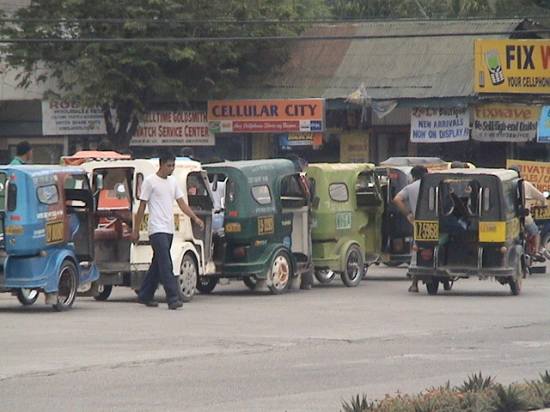
Abusive tricycle drivers

Hello All,

I would like to present a community concern.

It's about city tricycle drivers and the exorbitant rates they charge. They are most abusive on students.

Case 1: A student takes a ride together with another student or some other students enroute Gensanville Subdivision. Each one pays P15.00 each (negotiated or pakyaw). When one student is dropped at Phase I, drivers are just silent. But when drivers start maneuvering towards Phase 2, they start complaining that Phase 2 is far away and RENEGOTIATE for additional pay. That really stinks! The poor student - if he/she can stomach the incessant grumbling won't add another centavo but if he/she is pestered by the grumbling driver, he/she has no choice but to add. WHO WILL PROTECT our young students from ABUSIVE tricycle drivers? That's not all. Even when the students NEGOTIATE (pakyaw), the abusive drivers still pick up passengers along the way.

Case 2: Most tricycle drivers do not grant students their discounted fare. They even overcharge. What's wrong with this picture? Who will protect our young students from abusive drivers? Who will monitor the rightful imposition of the student discounted fare?

Case 3: Take the bus. When you disembark at the regular drop sites, the tricycle drivers approach you and charge P40.00. Hello. What's happening here? Who is protecting passengers from abusive tricycle drivers?

I am presenting this to you. How can we help our young students? The commuters?

The system really sucks.

Thank you.


Thursday, August 4, 2011

A teenager's thoughts on P-Noy's SONA


By Hezekiah Kit Sales Canlas

These past few days, a lot of people were busy criticizing our President’s State of the Nation Address which was delivered on July 25th. From what I have heard from the people around me, the President’s SONA concentrated only on the wrongdoings and the pitfalls of the past government led by the infamous ex-President (now Pampanga Congresswoman) Gloria Macapagal Arroyo. They said that if the current leadership would only focus on looking for the past sins of the former government and not on the current situation of the nation, our country would not improve. But because I haven’t heard nor read the address, I remained silent and just listened to their comments.

Because I did not catch the SONA on television, I surfed the internet and looked for the exact copy of the piece. From what I have read, the address somehow focused on the anomalies of the past government and how the current leadership is creating solutions to solve these. Most people also said that the SONA of President Aquino was somehow weak and does not have a vision for the Philippines.

At first I was disagreeing on what most people were saying. In my mind, I support the idea of solving these issues first. If we were to rise up as a nation, we should correct the past errors so that we can learn from it, and evade it in the future, and then concentrate on the current status of the country.

But after reading a blog on the internet about the SONA, my views somehow changed. “Yes, solve these issues. What next?” like what my mother always says. Instead of focusing on the faults of the previous government, the President and his team should focus on the things this country needs in order to progress. The President has honest subordinates. That’s why recently, more lapses of the past administration rose from the graveyard.

I think that the government should simultaneously work on the development of our country and on solving the issues of the previous administration. If our government now is strong just like what P-Noy said, and the people are actively working hand in hand with the government, then we can handle both of these challenges with ease.

It’s still a year after his inauguration; let’s give him a chance to prove his worth to lead us.

We should also prove ourselves as responsible and empowered citizens of our country by not waiting for the government’s assistance to help us clear and clean our garbage-stuffed canals and rivers. Instead, we should find the solutions to these common community problems and solve them ourselves.

Monday, November 8, 2010

Project Pagsubay

(I'm posting the letter found below as manifestation of my support for this project. Please read on.)

Batchmate:

We are writing on behalf of the Elementary and High School Batches 1979 and 1983 of the Holy Spirit School and Holy Name University of Tagbilaran City, Bohol , Philippines . On December 17, 2010, our project 'Pagsubay' will be launched via a Medical and Dental Mission at the Cabawan Elementary School of Maribojoc, Bohol , Philippines .

'Pagsubay', meaning 'to retrace', is a word that punctuates a search for some forgotten footpaths from childhood . It also pertains to the search and retrieval of lost sheep.

‘Pagsubay’ is an outreach project which aims to help elementary schoolchildren in an underprivileged barangay school in Bohol , Philippines . This non-sectoral, non-political and non-profit engagement aims to provide sustained medical missions and educational assistance initiatives.

Our project recipients are 175 schoolchildren of the Cabawan Elementary School of Maribojoc, Bohol, Philippines who are in dire need of assistance in terms of health and education. The school is situated in a community where the most basic problems like poverty, malnutrition, and diseases bring day to day impact on the children's lives.

Our group is composed of committed and willing volunteers who are ready to face the challenge of elevating the standard of these schoolchildren’s lives. We are proud to say that we stand firm on these positions:

 That every child has the right to good education
 That good health and nutrition are major factors that affect and determine every child’s learning process
 That every child has the right to an adequately provisioned, well facilitated, and well maintained learning environment

The Medical and Dental Mission on December 17, 2010 will include obtaining a health profile and medical history for each child (measuring growth parameters like height and weight), and performing a complete physical examination to identify acute or chronic health problems; instituting immediate therapeutic interventions in the presence of acute illness by prescribing appropriate medications; educating caregivers on the preventive aspects of child health; and, identifying dental health problems and providing immediate and long term solutions. This one-day Medical and Dental Mission shall culminate in a children’s party and the distribution of Christmas give-aways.

We kindly seek your financial assistance in providing this opportunity to the schoolchildren of Cabawan Elementary School , and in making this project a success.

If you would like more information about Project ‘Pagsubay”, please feel free to contact us through these details:
• Website: http://www.pagsubay.org (coming November 2010)
• Facebook: http://www.causes.com/causes/524939

Donations can be mailed to the following Pagsubay coordinators. (Please make checks payable to the name of the Pagsubay coordinator.) We assure you of a proper accounting of all donations received.
• U.S.A.
o Gina Torralba Calipes
611 S. Bronwyn Drive, Anaheim , CA 92804
o Ricky Inting
18 Oceanside Drive, Daly City , CA 94015
• Middle East
o Cora Merilos Ropeta
P.O. Box 115427, Dubai, U.A.E.

Deposits can also be made directly to the Pagsubay bank account in the Philippines :
Account Name: Jonas Gilberto S. Inting
Rosario O. Chatto
Aimee T. Dela Peña
Account Number: 123-51550-8
Bank Name: Metrobank
Routing Number: 026002846 (within USA )
SWIFT Code: MBTCPHMM

The children of Cabawan have inspired us into the creation of this project, and we can only hope that their lives will touch yours as they have touched ours. So please consider this request and invite your family, neighbors, friends and your community to join in and know of your willingness to help.

Team Pagsubay:
Jose Nazareno
Ma. Neva Luna Batayola, M.D.
Mary Ann Alagon Ruiz, M.D.
Noel Lungay
Ricky Inting
Gina Torralba Calipes

Friday, September 24, 2010

What were you thinking?

Were you able to watch the television interview of Ms. Gloria Diaz where she mentioned about “Cebuanos not able to speak in English and Tagalog”? Wow! I was totally aghast! Of course the context was beauty pageants where contestants can’t articulate themselves very well in the English language.

Oh boy, what was she thinking? Does she even know that majority of Cebuanos speak good, if not fluent English? What a major blunder on her part.


Cebuano-speaking people have a hard time learning Tagalog because that’s not their mother tongue, however, they are more interested to learn and speak the English language.

I was expecting a torrent of complaint after she uttered her now infamous line. And it’s now happening. A Congress representative from Cebu has spoken about it. And more Cebu leaders are coming up with Resolutions decrying what she said.

I expect that. That was a very insensitive statement. Stereotyping is the word. It is ironic coming from an international beauty winner like her.

She should have been more careful and circumspect; more tactful. Tact, tact, tact, where art thou?
I speak Cebuano or Bisaya if you prefer that. I was born, raised and educated up to college in Bohol; I knew that Cebuanos love their language so much. Their Cebuano (Bisaya) music is very rich in poetry and prose; their Bisaya poetry is very prolific. I know this for a fact. I have met some Cebuano poets. My sister Delora dabbles in both Cebuano and English poetry and she has introduced me to some of her Cebuano poet-friends. They preserve and cultivate their language and yet they speak good English.

Here, let me share a trivia from Wikipedia:
The Visayan languages (or Bisayan languages) of the Philippines, along with Tagalog and Bikol, are part of the Central Philippine languages. Most Visayan languages are spoken in the Visayas region but they are also spoken in the Bicol Region (particularly in Sorsogon and Masbate), islands south of Luzon such as those that make up Romblon, most of the areas of Mindanao, and the province of Sulu located southwest of Mindanao. Some residents of Metro Manila also speak Visayan.

Over thirty languages constitute the Visayan language family. The Visayan language with the most speakers is Cebuano, spoken by 20 million people as a native language in Central Visayas, northern and eastern parts of Mindanao. Two other well-known Visayan languages are Hiligaynon, spoken by 7 million in western Visayas and Waray-Waray spoken by 3 million in eastern Visayas.
o O o

Have you seen on television how government officials are passing the buck about the bungled hostage crisis?
A mayor was identified by a police general as the person calling the shots; the mayor in turn, pointed his finger at the police as the over-all in-charge of operation.

Hello! We can see who’s lying through his teeth? It’s a shame that when one can’t take the heat, he casts the blame on another person (or organization).

Men, show us some backbone. Prove the stuff that you are truly made of.

If you messed up, just have the gumption to accept it. Leadership calls for the highest form of courage. If you don’t have the courage to face the consequence of your action, resign and save your dignity.

o O o

Three communications secretaries and no one was speaking during the day-long hostage crisis until its bloody end? To borrow the British expression: “bloody ineptitude”! Where in the world were the experts? A crisis situation requires crisis communication. The government has three communications secretaries for crying out loud but nobody even dared use crisis communication when it was needed.
The failure is appalling.

Our training in crisis communication teaches us that in times of crisis, the crisis management committee convenes with utmost urgency and appoints the official spokesperson whose personality will represent the company (or the government in this particular instance) for the duration of the crisis. The spokesperson can use any medium available to update the public about the on-going situation. In the case of the hostage crisis, television was the most effective medium. The spokesperson gives the rightful information without exaggerating and causing panic. She serves as the major link between the company (or the government) and the public most especially the affected sectors – maintain connectivity. She must be visible for the duration of the crisis situation. She assures the public that the company (the government) is working on the resolution of the crisis at hand. And when it is over, she wraps up the entire situation with an official statement or press briefing, whichever serves the purpose best. Needless to say, she has to be supported by a team which will facilitate her communication requirements like direct link with the company head (government leader); processing of updated information; crafting of the right messages to deliver to an anxious public and the like.
What a shame that with three cabinet communications secretaries, nobody was there to speak on behalf government.

Well, I’m only presenting this information since I have served as Corporate Communications Officer for three power companies for the past fourteen years. Our crisis situations were always the toppling of our towers by lawless elements; partial power system collapse or full power system collapse. We knew what we ought to do when these situations arise.

Personally, my commitment as a communications person is to prevent a communication vacuum. Why? Because the absence of information creates confusion and panic. When confusion and panic set in, speculations arise. You can only imagine what people will think given a prolonged blackout. So before people start speculating about the absence of power, give them the needed correct information right away (or as soon as available). In this manner, only the right information comes out.
If information is not readily available which happens all the time, come out with an initial statement and follow through. Like I said, never allow a communication vacuum to happen. An information vacuum encourages speculations. Absence of information itself is a crisis waiting to happen.

o O o
Food for thought:
Faced with crisis, the man of character falls back on himself. He imposes his own stamp of action, takes responsibility for it, makes it his own.
- Charles de Gaulle